Drop The Gloves- Fighting In Hockey

What comes to your mind when you hear the word “enforcer”? Did you picture a big tough, muscly guy? In the NHL, enforcers are supposed to respond to dirty or violent plays made by the opposing team. They normally respond by dropping the gloves and fighting a member of the opposing team, normally that teams enforcer, or goon. It is an unofficial role in the NHL  as enforcers only have skills to help them fight, not to score.

Recently there has been talk to ban fighting in hockey, which I do not agree with, as fighting has been a tradition in hockey since hockey first started in 1922.

There are two main reasons why you should stand up in your seats during a hockey game: someone scored, or there is a fight. My very first hockey game, there was a fight as soon as the puck dropped. I remember after the two players had finished fighting and got assessed penalties, Shawn Thornton became my favorite Bruins. Below is the video of the game I went to, but at that time Shawn Thornton was the Boston Bruins enforcer, as well as Adam McQuaid, who is highlighted in the video below Thornton’s.


Fighting in hockey adds to the entertainment value as well as protection for the younger star players. The enforcers know their role and stick to it well, even if fighting in hockey is slowly dying out. The website Hockey Fights is a great tracker for all things related to fighting in hockey.


In Pop Culture

Enforcers are highlighted in pop culture, such as movies being made surrounding their role. The 2011 sports comedy, Goon, follows an enforcer for a minor league hockey team. Below is the trailer for the movie.

There was also a documentary released in 2016 that highlights the ice hockey enforcer role, it is one of my favorite movies. Below is also a trailer for the movie, it can be found on Netflix as well as other movie streaming sites.

https://www.youtube.com/watch?v=iKwV36s7bdI


CTE

In recent season, fighting in the NHL have gone down, as the game is now focusing on skill instead of showing toughness. Concussions are also a hot topic in fighting in hockey. Players are skating at each other at more than 30 miles per hour, you can imagine how it must hurt if you were to collide with someone and risk smacking your head against the hard ice. So far, six NHL players have died due to CTE, or chronic traumatic encephalopathy. In short, CTE is a degenerative brain disease found in athletes. CTE is a very important issue in sports today, former New England Patriot Aaron Hernandez, had stage three out of four CTE at the time of his death.


Tragedy

Derek Boogaard was an enforcer for the Minnesota Wild of the NHL until 2011. He died at age 28, due to an accidental drug and alcohol overdose while recovering from a concussion. An examine of his brain showed that he had an advanced form of CTE not typically seen in NHL enforcers. His death followed two other hockey enforcers which sparked the debate over if the enforcer role should even be in the NHL. While the league has taken some steps to address the concussion problem, most recently in banning blindside hits to the head and requiring that players suffering head injuries be examined in a quiet room away from the bench, it is still not convinced that the CTE found in Boogaard and other players posthumously is a direct result of their hockey careers. Since Booogaard’s death, his family have been running a camp for children age 12-18, teaching children how to not get hurt in a fight, as Boogaard, listed at six foot seven, knew how to fight well.


Until Next Time

~RJ

Fake News: Misleading Information

Fake News

The recent spread of fake news is important when marketing a brand, product or just someone’s image. The definition of fake news is fabricated news, it can be found on any kind of media, but has no basis in fact. In the recent presidential election, fake news was a favorite phrase Donald Trump used to deflect any bad stories about him, even though most had facts to back up claims. For media outlets, the ability to attract viewers to their websites is necessary to generate online advertising revenue. If publishing a story with false content attracts users, this benefits advertisers and improves ratings. Fake news is often created to influence views for political motives.

While some news sources are more reliable than others, everybody has their own opinion and choice on where they want to get their news from. There are seven types of fake news: parody, false connection, misleading content, false context, impostor content, manipulated content, and fabricated content. Below are some helpful ways to spot a fake news story.

It is so important to check if the content you share is coming from a credible source, before you share it to a wider audience. On social media, fake news can be spread around like wild fire if someone that has a huge following, like any of the Kardashian’s, shares something. Today, social media is where most people obtain their news from, rather than a newspaper or a news reporter.

Fake news can clog up news distributors, filling our timeline with meaningless information instead of informing people with worthy information. Facebook has taken a step to try and cut down on the “fake news” spreading on its platform, by flagging or reporting those posts as inaccurate. There are “bots” used by fake news publishers that make their articles appear more popular than they are. This makes it more likely for people to discover them. Bots are fake social media accounts that are programmed to automatically ‘like’ or retweet a particular message.

With the emergence of fake news, no one knows what is credible information and what is fake news. Celebrities that are considered role models, have to think twice before sharing content because of their power over their fan base.

Gossip magazines are NOT a credible source for news, I sometimes call them my “trash” magazines, I’ll grab one if I am about to board a plane but I would not go out of my way to buy one for fun.


Endorsements

Celebrity endorsements are also an important contributor to fake news. For Instagram influencers, they can promote a brand, like FitTea, knowing that their followers will go out and buy it. The influencer most likely did NOT actually use the product, just faked it to get payment and promote it to their audience.

In conclusion, fake news is fabricated news, that can be spread on any social platform. The term became popular during the 2016 U.S Presidential Election with Donald Trump (just go view his Twitter). Celebrity endorsements can also be a form of fake news, if the product they are endorsing is not what it said it is.

Until Next Time

~RJ

SMM: Social Media Marketing

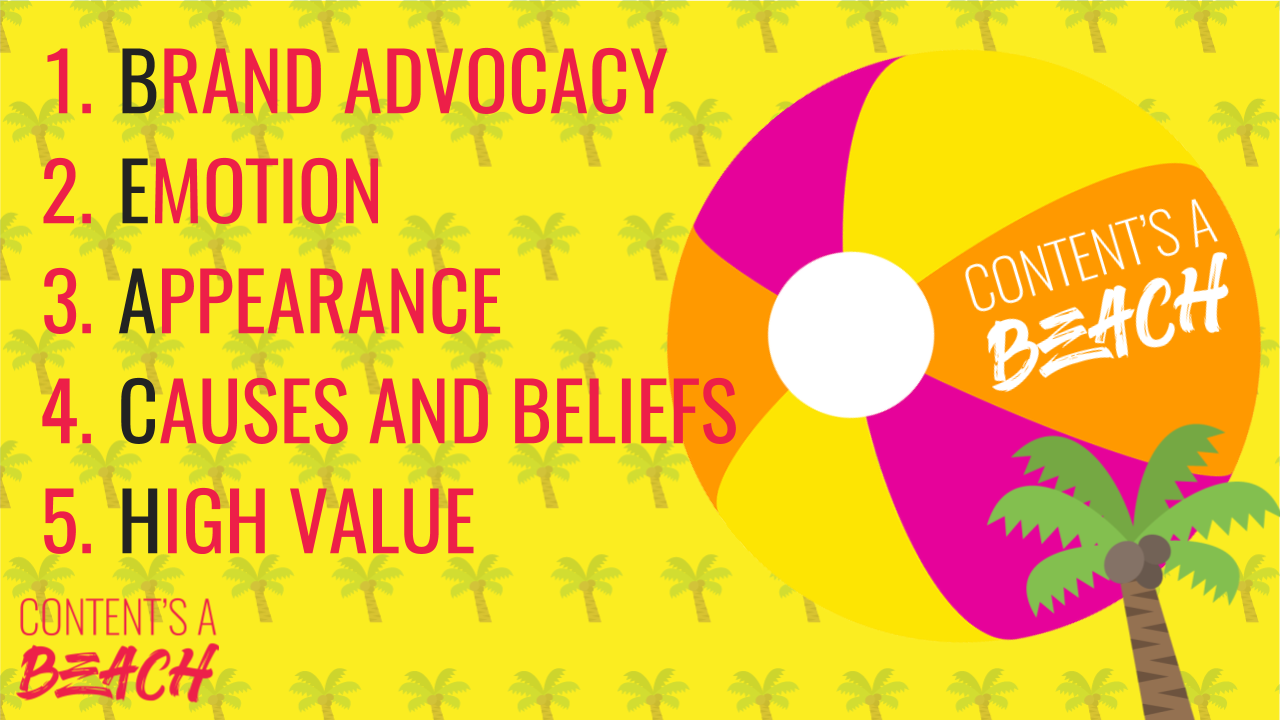
Today I am reflecting on a post I came across about how to create shareable content. The link to that blog post can be found here. The main message of the post is how to grow your social media audience in the quickest way possible. The author of the post, Kim Garst, gives an acronym that sums up five reasons why people are going to share content on social media: BEACH.

B: Brand Advocacy

People will share your content if they are fans of your brand. The article gives the readers some tips on how to create more brand advocates. The first tip is to be productive, you have to WANT to go out and get your name out there, even if that means reaching out first. 

Being reliable will result in brands sharing your content without even reading it, because they know what to expect from you. This stems from the first time of brand advocacy, being productive. 

Letting people know more about you and your brand is a great strategy. People are more likely to get behind a face rather than a logo. Human connection is important because if people can’t connect with your content, chances are they won’t be reading or sharing it. 

E: Emotion

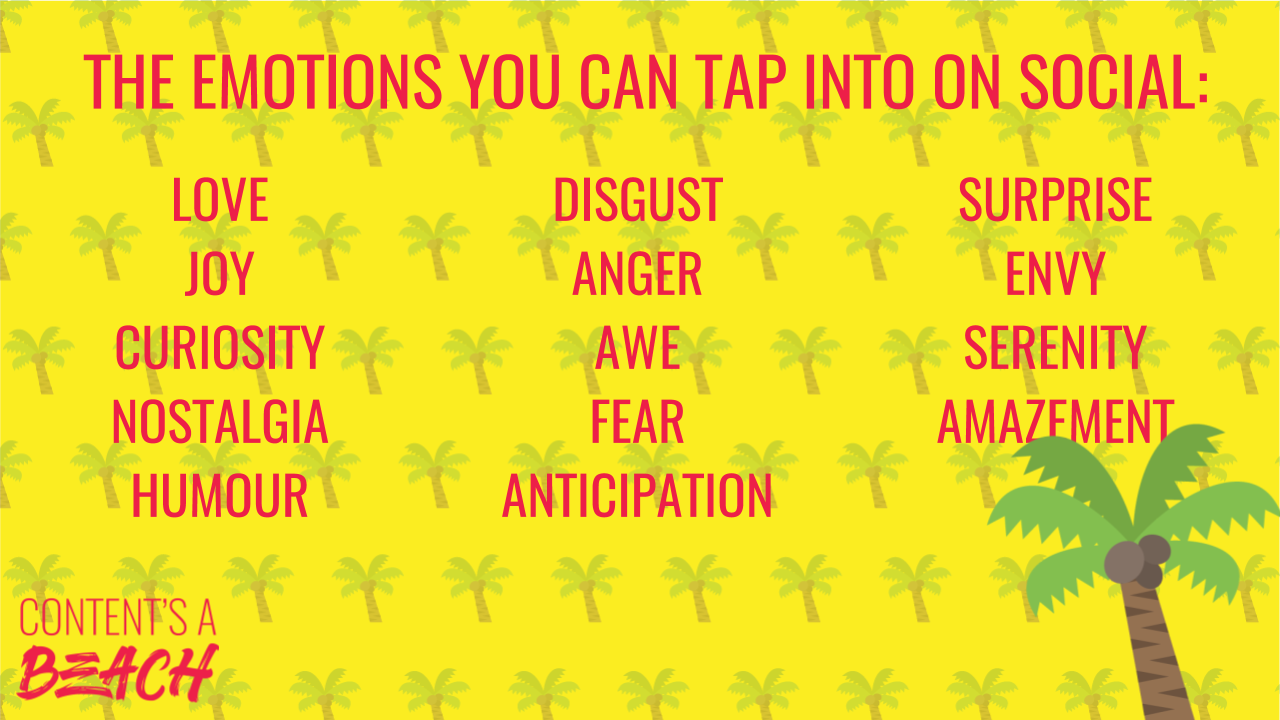
As I stated above, human connection is important. When we tap into emotion, content is more likely to go viral and be shared. There are a wide variety of emotions that we can use on social media.

The more extreme the emotion is, the more it moves people. Nobody wants to read vanilla content all the time, we seek connection and humanity in the content we read and share online. 

A: Appearance

People will only share content online that helps them in their goal to portray themselves in any way they want to be seen. Nobody wants to look bad in front of their friends, it’s not natural. If you want more shares, make your audience look good with the content you post. This one is the most self-explanatory. 

C: Cause and Beliefs

If you want more shares on your content, align your brand to a cause that is BOTH real and relevant. If you can do that, you hold the power to have your content shared. This is also called Cause-Based Content Marketing. Success in this area is all about developing the right strategy and executing it in an authentic, organic way that brings mutual benefit to everyone involved. 

H: High Value

Lastly, if you want more shares, you have to make your content more valuable. What this means is go the extra mile when creating your content, it shows that you are committed to your craft. 

To summarize: 

Until Next Time

~RJ 

Pure Hockey

For those who are not familiar with the brand Pure Hockey, the brand was founded in 1994 in Worcester, MA. Pure Hockey is now the largest hockey retailer in the USA, supplying hockey equipment to those who play the sport. Their job is to create the environment in which kids and parents can see the product, learn about it and get fitted for it; all the while hanging out in a totally cool and nothing-but-hockey world.

The brand runs TV commercial style ads, normally on a sports channel like NESN. I always see these ads when there is a commercial in a hockey game. A marketing strategy they use in their ads is getting a notable hockey player to star in the commercials.

In this ad, Shawn Thornton, who is now retired, was most notably known for “dropping the gloves” as he was a hockey enforcer. An enforcer usually is one of the most feared players on the ice, so Pure Hockey used the comedy aspect with having Thornton be afraid of women who is notability smaller than him.

In this ad, Pure Hockey translates the feelings that a hockey player feels toward getting a new stick. In the description they say, “Every hockey player knows that feeling of a new, beautiful, shiny taped up stick. You can’t put it down. Our latest commercial puts that feeling into video”.

In this video, posted to their YouTube channel, you get a behind the scenes look into what Pure Hockey is. You get to see what they offer in a very straight to the point sense, from gloves to skates to sticks. This video gives the customers of Pure Hockey an authentic approach of what traditional ad’s look like.

On Pure Hockey’s Twitter, they post memes, polls, giveaways, and exclusive content. They roughly have around 14.5K followers and many hockey players league wide have contacts with them.

Pure Hockey’s target audience is anyone who is interested in hockey. As their website states, “it doesn’t matter to us if you’re new to hockey or a seasoned vet, we have the gear for you and we gladly share our enthusiasm for our products – in our stores, on the ice, on the street, at home or on the inline rink”.

Below are all the external links to Pure Hockey’s social media’s.

Website: https://www.purehockey.com/default.aspx

Facebook: https://www.facebook.com/purehockey/

Twitter: https://twitter.com/PureHockey?ref_src=twsrc%5Egoogle%7Ctwcamp%5Eserp%7Ctwgr%5Eauthor

YouTube: https://www.youtube.com/channel/UCOItFN6Xj63KIm3bmbl52cA


Until Next Time

~RJ